
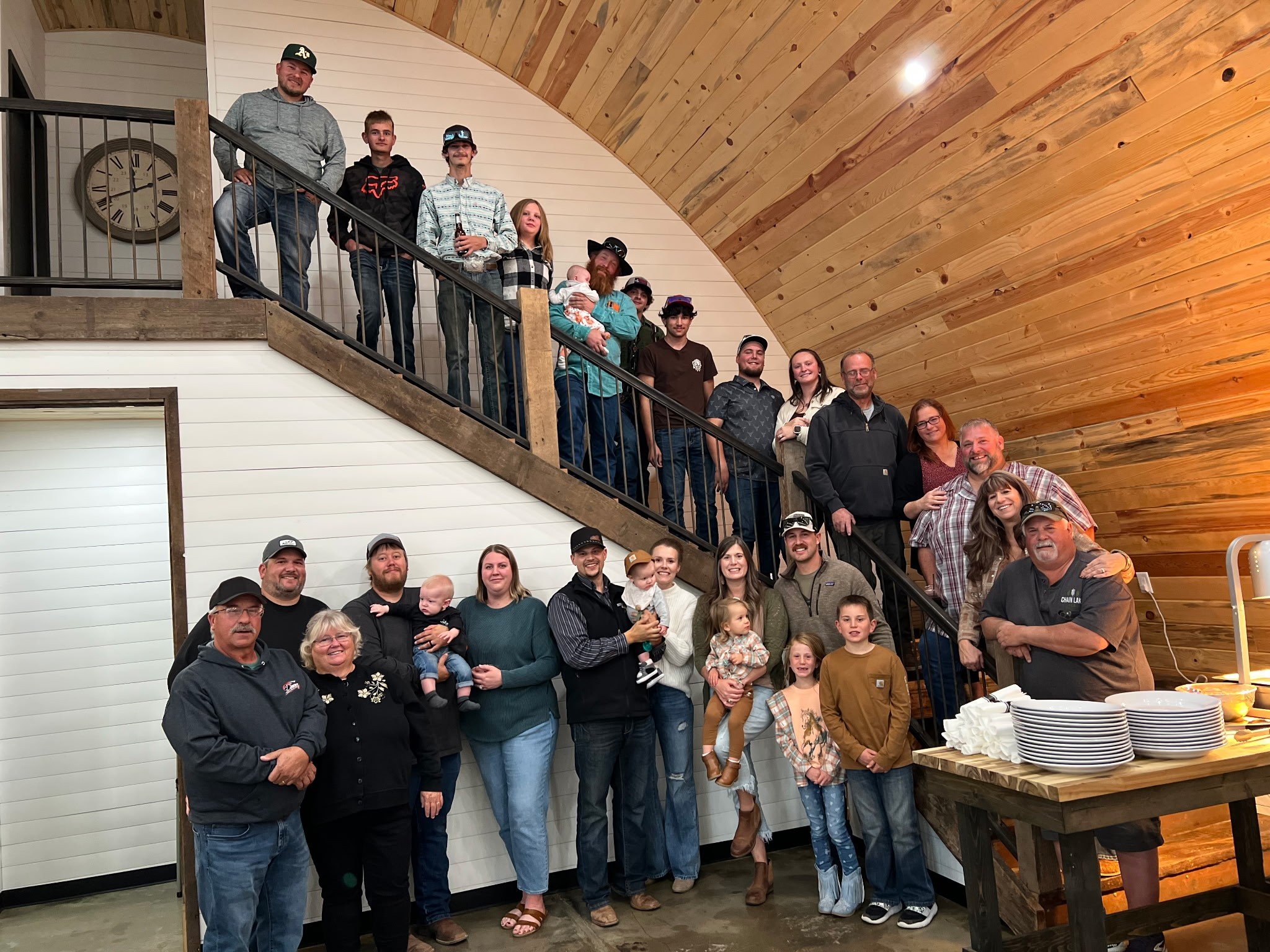
Producing crops in northern Montana is a vastly different undertaking than a typical corn and soybean operation in the Midwest. For Cody Donoven of Kremlin, Montana, protecting margins on a diverse rotation of spring wheat, barley, canola, mustard, chickpeas, lentils and flax means navigating markets that cannot be hedged on a traditional futures exchange. To scale his independent operation alongside his family’s, Cody needed a financial partner with deep agricultural experience who would value specialized production rather than just a land deed.
What are the limitations of traditional ag equity lending?
When Cody launched his independent farming operation in 2018, finding that kind of forward-thinking partnership proved nearly impossible. He quickly discovered that local banks relied almost entirely on established real estate equity to secure operational lines of credit. This rigid focus created a barrier for a young operator trying to build momentum on leased ground.
“The bank’s reliance on paid-off land equity was always a challenge for us with the local lenders,” Cody explained. “They didn't really understand revenue protection crop insurance, or they didn’t put any value on it. They like to see guys that have land paid off, and to me, that model is broken. How is a young farmer supposed to get started? It limits growth.”
Why production-based lending favors specialty crop contracts
This growth ceiling exists because traditional ag lenders are often subject to strict debt-to-equity ratios, leaving little room in their underwriting models to value alternative marketing agreements. When Cody transitioned Donoven Ag’s operating credit to FarmOp Capital, the evaluation shifted away from physical real estate toward its production history and risk management strategy. By underwriting the real value of the operation’s forward contracts — which secure premium pricing for specialty commodities like mustard and organic spring wheat — FarmOp Capital recognized their true cash-flow value, whereas a traditional bank only saw standard commodity floor prices.
“We have a lot of forward contracts that we contract ahead of time, and FarmOp values that where the local bank didn’t value that at all,” Cody said. “We’ve had organic spring wheat contracted for $20 per bushel, and the local bank was valuing it the same as conventional spring wheat at $7 per bushel. It just didn’t make any sense. FarmOp lets us leverage those contracts, which has been a huge asset for us.”
Separate marketing decisions from loan deadlines
Securing an operating budget based on the true value of his contracts did more than lift Donoven Ag’s borrowing power — it enabled a much more proactive strategy. Traditional annual notes typically require full repayment by a fixed deadline, which can pressure producers to liquidate grain during the harvest window when seasonal supply often weighs down the basis.
FarmOp Capital structures its operating lines with flexible 18- to 24-month terms — tied to individual crop years — which allows Donoven Ag to carry overlapping loans. This gives them the financial runway to secure next year’s inputs while holding last year’s grain to capture market carries.
“Right now, there’s been some 50 or 60 cent carries in the wheat market that we’ve been able to hang on to the wheat longer,” Cody explained. “We aren’t forced to sell just because a calendar date says a note is due. Since FarmOp Capital allows us to do that, the farm’s making more money. If we had to sell everything by March, it would have cost hundreds of thousands of dollars.”
Expanding an operation without land equity
By protecting his cash flow from rigid calendar dates, Donoven Ag gained the financial agility they needed when an unexpected growth opportunity arose. When a retiring area producer offered a turnkey lease on a major block of land, Cody was ready to act. Rather than demanding real estate collateral he didn’t own, FarmOp Capital evaluated the expansion strictly on the new land’s projected production revenue.
With upfront capital secured to fully cover his expanded operating costs and equipment needs, Cody stepped into the lease, allowing Donoven Ag to double its original size in a single season.
“We would have never been able to do that with my other bank — they would have laughed us out of the building,” Cody said. “Now, as long as the cash flows and our expenses are less than what our guaranteed income is, they pretty much say go for it. If you’re trying to get started and you’re ambitious and smart and want to grow, then FarmOp Capital is the place to be.”
Is production-based working capital right for your operation?
Ready to turn your operating loan into a tool for growth?
Call: 833-327-6677 | Email: sales@foc.ag | Online Contact Form